
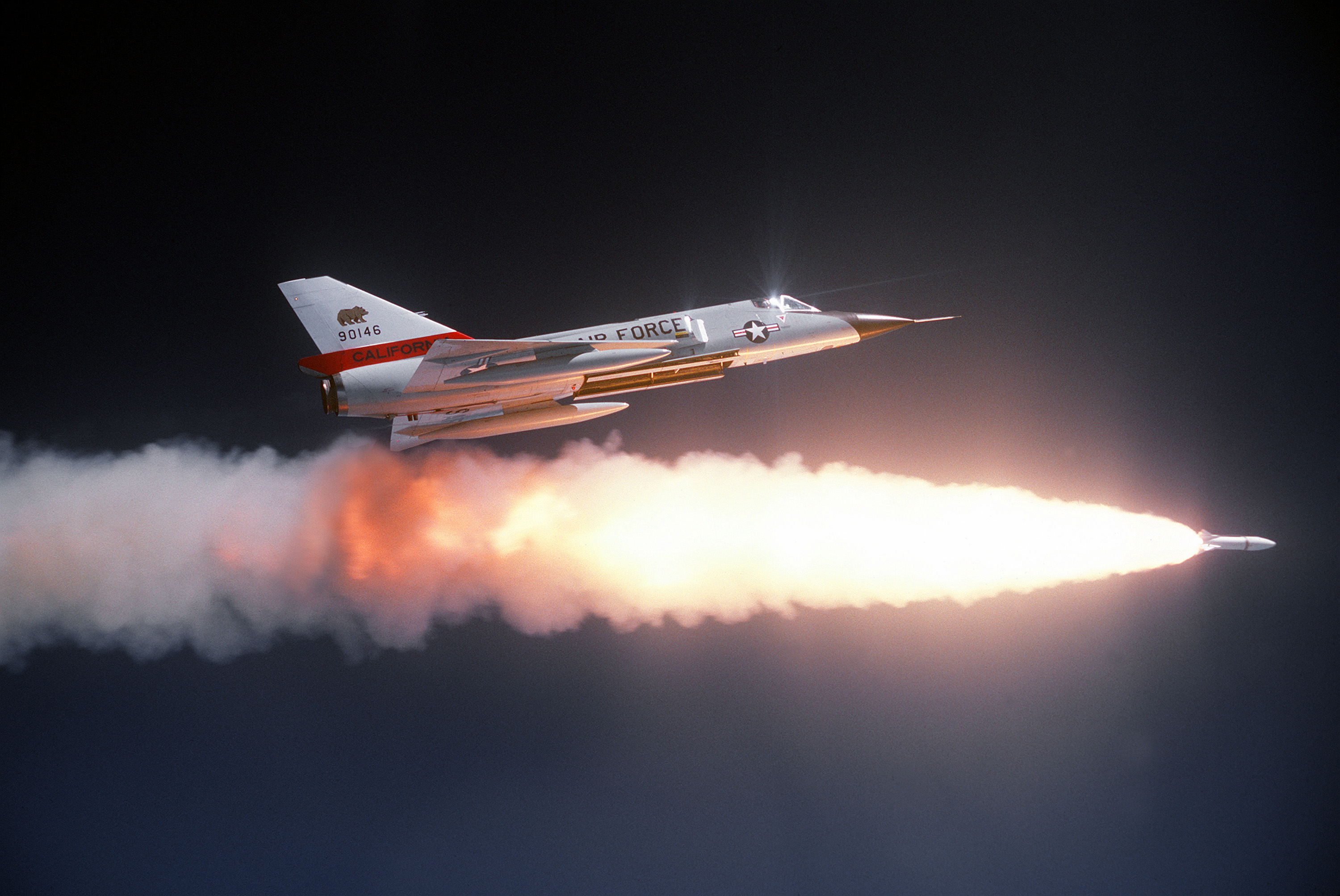
Pictured above is an F-106 of the California Air National Guard as it deploys an inert version of the infamous Genie. The AIR-2 Genie was an unguided air-to-air missile that really didn’t need any guidance as long as it was fired in the proper general direction of oncoming formations of aircraft.
Why’s that?
Well, because it carried a 1.5 kiloton nuclear warhead with a lethal range of over 1000 feet; absolutely devastating to tight formations of bombers and escort fighters flying in from the Soviet Union. The shockwave of the blast would be able to rattle aircraft flying outside of the lethal radius significantly, possibly punching them out of the sky as well. The best part about the Genie was that it was virtually harmless to civilians on the ground, who might inadvertently find themselves underneath a major air battle in the skies above. To prove this, in 1957 during the month-and-a-half long Operation Plumbbob nuclear tests, the Air Force sent a jet up to fire a live Genie so that scientists and researchers could observe and document the effects of the detonation.
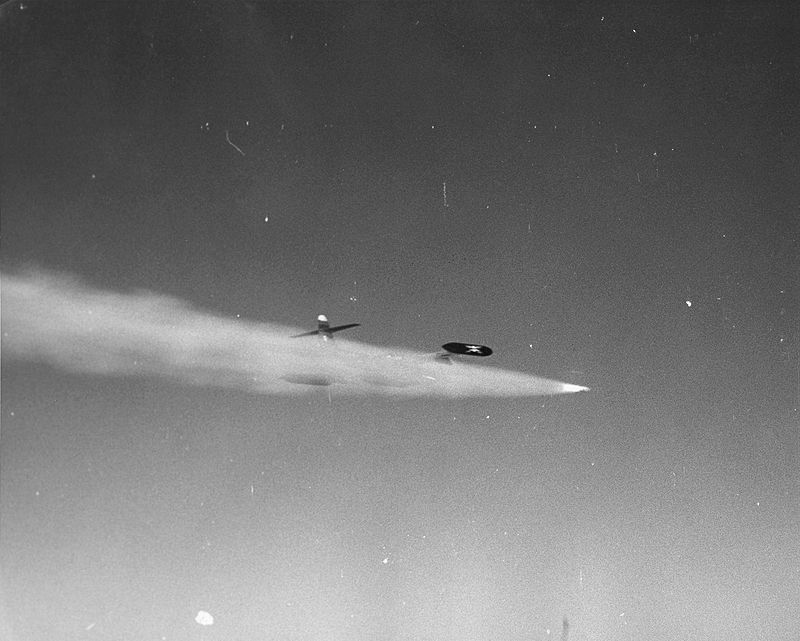
Code-named “Shot JOHN”, the unnerving task of launching the Genie was given to then-Captains Eric W. Hutchison and Alfred Barbee, flying an F-89J Scorpion of the Montana Air National Guard over the Yucca Flats. After briefings from Air Force officers, government officials and a set of scientists, Hutchison (pilot) and Barbee (radar operator) climbed into their jet and took off at 0605 hrs from Indian Springs AFB (now known as Creech AFB) in Nevada and flew towards the target area where they would release the armed AIR-2 fitted onto a hardpoint underneath their Scorpion. Just in case something went wrong, a backup F-89J took off at 0620 hrs from Indian Springs as well, similarly armed with a sole Genie. As soon as they were cleared to do so, the primary crew fired the missile and banked away with the secondary Scorpion to the left immediately afterwards and then proceeded back to Indian Springs where both landed at 0707 and 0708 respectively. At the time of detonation, according to USAF documentation, Hutchison and Barbee’s jet was about 11,000 feet away from the epicenter of the blast.
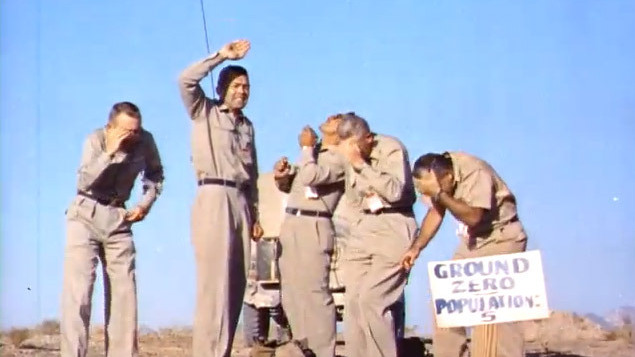
In addition to the Department of Defense personnel sheltered a fair distance away from the center of the blast, five officers from Air Defense Command had previously volunteered to stand directly at ground zero during the test-firing. They were assured beforehand that the radiation emanating from the detonation would not harm them… at least in theory. Colonel Sidney Bruce, Lieutenant Colonel Frank Ball, Majors Norman Bodinger and John Hughes, as well as Don Lutrel all stood by a sign that said “Ground Zero: Population Five”, created by the Air Force public affairs officer who recruited them for the exercise. Joined by a photographer from the US Army, George Yoshitake, they all witnessed the blast over 10,000 feet above their heads. As scientists predicted, the radiation that reached the six men underneath the detonation was very non-lethal and completely negligible.
The Genie was used operationally with the USAF and the Royal Canadian Air Force up till 1985, when all were retired from service. Experts eventually decided that they would no longer need to fear bombers as being the primary incoming delivery vehicles for conventional bombs and nuclear devices, but rather, untraceable submarines that could launch their ballistic and cruise missiles from the depths of the oceans. Shot JOHN was the only time a live Genie was ever detonated. All other Genie shots were generally of the ATR-2, a training “dumb” version of the missile. All in all, the Genie was one heck of a fearsome weapon. One that I personally find, today, most under-appreciated when discussing military aviation during the Cold War.

 The Tactical Air Network
turns out my grandpa was officer in charge of the project!
I’m trying to gather FOIA documents that show my dad may have actually been present at Yucca Flats for the John shot. any advice?
LikeLike
I am your Aunt Betsy deVries Gohde. Yes, John was there. Your grandfather had a picture of the Genie shot proudly displayed over his couch in his office at 4610 Moffat Lane. You may contact me at 719-650-8125 or bgohde@gmail.com. While my son worked at Harvard for 4 years we traveled around Massachusetts collecting information on the Atwood side of the family. We also gathered information in New Jersey while we visited my husband’s family. If your interested. Is my brother still with us?
LikeLike
I am your Aunt Betsy deVries Gohde. Yes, John was there. Your grandfather had a picture of the Genie shot proudly displayed over his couch in his office at 4610 Moffat Lane. You may contact me at 719-650-8125 or bgohde@gmail.com. While my son worked at Harvard for 4 years we traveled around Massachusetts collecting information on the Atwood side of the family. We also gathered information in New Jersey while we visited my husband’s family. If your interested. Is my brother still with us?
LikeLike